
Running a Sex Offender Check in Acadia Parish
Start with the Louisiana State Police public sex offender registry for Louisiana registrations. The gateway requires a visitor to accept its conditions through “I AGREE,” and JavaScript and cookies must work. Those conditions matter because the state expressly disclaims a guarantee that submissions from courts, corrections, and local agencies are complete, accurate, or timely.
Use a name only when enough identifying detail is known to avoid a false match. For a place-based safety check, use only the search options actually visible on the live interface. The research could not verify exact current radius choices, dropdown contents, result sorting, or export behavior. Questions belong with the local registration agency or LSP registry support at 800-858-0551, weekdays from 8:00 a.m. to 4:30 p.m. Central.
The Louisiana Registry Conditions Gate
The official gateway is not a plain text directory. It presents use conditions before the vendor search loads. If the form fails, enable JavaScript and cookies, reload it, and avoid guessing that an empty screen means no registrations exist. The support mailing address is P.O. Box 66614, Box A-6, Baton Rouge, LA 70896.
The registry's warning sets a sound verification rule for Acadia Parish. A search result is a public notification record, while the underlying conviction and sentence remain in a court file. Follow a case-level question to Acadia Parish criminal court records. Follow a new custody event to the Acadia Parish arrest history channels.
Searching the Louisiana Sex Offender Registry
Search fields must be read from the live interface because the research did not reliably extract the vendor form. The safe process separates confirmed gateway behavior from unverified controls.
- Open the official Louisiana State Police registry gateway.
- Read the conditions and select “I AGREE” only if those terms are accepted.
- Use the name or location controls that are visibly offered on the current form.
- Compare all displayed identity and status details, then contact the registration agency with questions.
| Search element | Status | How to use it |
|---|---|---|
| Conditions choice | Verified | Select “I AGREE” to continue or “I DO NOT AGREE” to leave. |
| JavaScript and cookies | Verified | Both are required for the gateway. |
| Name controls | Confirm live | Use labels and formats exactly as displayed. |
| Place or radius controls | Not verified | Do not assume a radius value or dropdown choice. |
| Alerts | Confirm live | Enroll only through an official option shown by the portal. |
NSOPW Adds a Cross-State Check
A Louisiana result does not answer whether a person is registered in another state, territory, or tribal jurisdiction. The U.S. Department of Justice's National Sex Offender Public Website aggregates participating public registries and is the correct supplement for a cross-border search. It does not replace local verification or cure delays in a source registry.
The official National Sex Offender Public Website is shown in the captured image below.
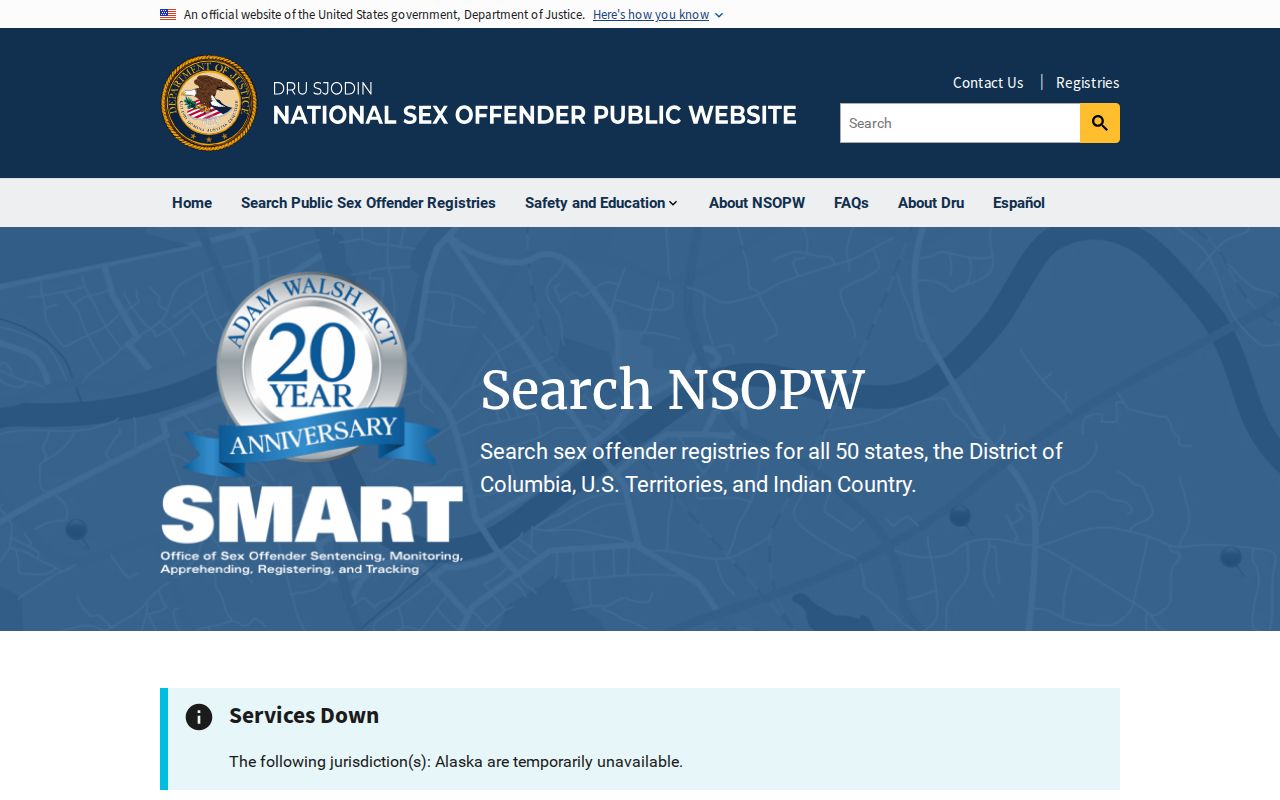
Compare any national match with Louisiana's entry and ask the relevant registration agency to resolve differences.
What a Registry Profile Shows
Louisiana law supports public notification categories, but the vendor interface must be checked before claiming every field appears in every profile. The following inventory distinguishes expected statutory categories from a promise about the current display.
| Name and aliases | Identity names may help distinguish a match; confirm them live. |
|---|---|
| Photo and description | Identity and physical details are expected notification categories. |
| Registered residence | An address is a reported registration detail, not a guarantee of real-time presence. |
| Offense information | Offense and conviction facts may be listed; use the court for the full case. |
| Registration status | Status or compliance information must be read from the current profile. |
| Other notices | Only rely on fields actually visible in the official interface. |
Louisiana Registry Definitions Matter
Louisiana uses statutory categories and duties rather than a simple generic SORNA tier chart. Definitions affect who must register and which duration rule applies. Avoid translating the public entry into a made-up Tier I, II, or III label when the official record uses a Louisiana category.
The official Louisiana registry definitions law is preserved in the captured source below.
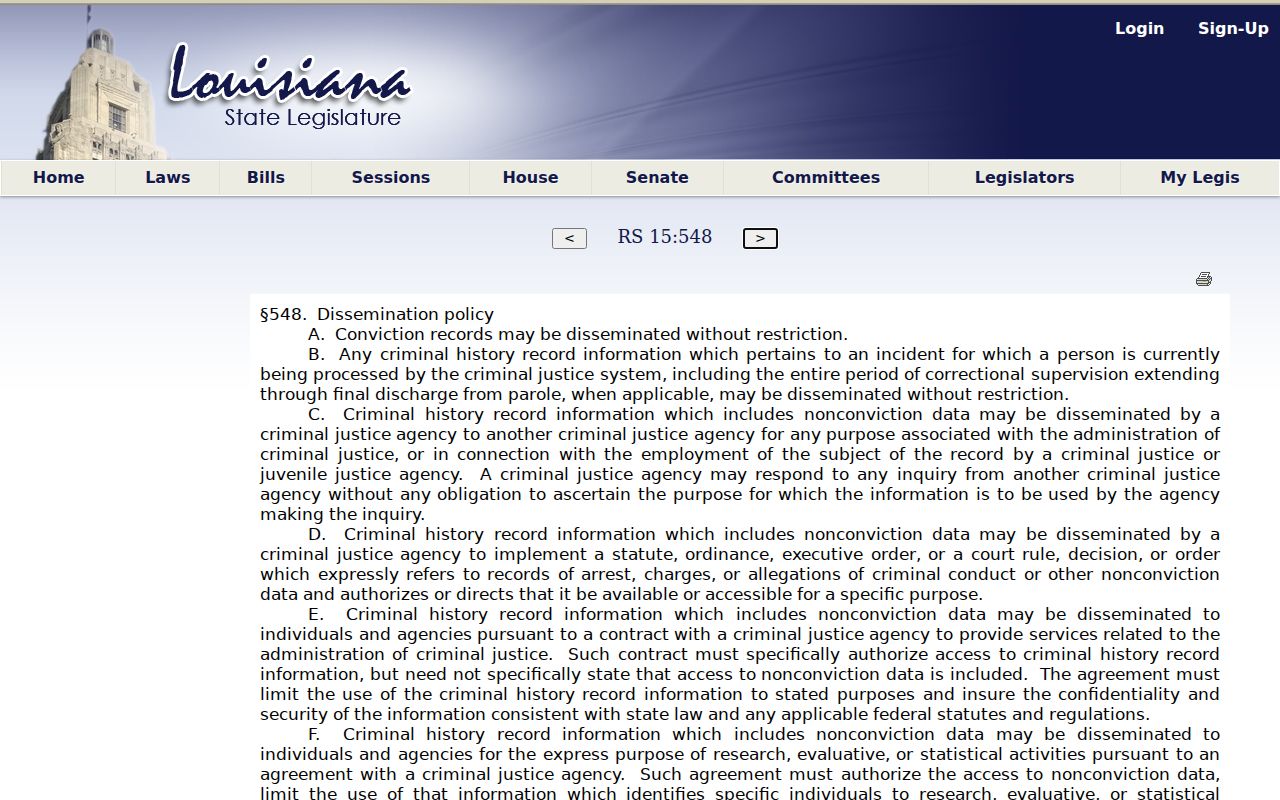
Read the offense, dates, and status as published, and send classification disputes to the proper agency or qualified counsel.
Registration Requirements and Levels in Louisiana
Under Louisiana Revised Statute 15:544, the general duration depends on the statutory category. Registration generally begins in person within three business days of establishing Louisiana residence under R.S. 15:542, subject to the statute's details. Acadia's local registration agency handles local compliance and clarification.
| Louisiana category | General duration | Important qualification |
|---|---|---|
| Baseline registrant | 15 years | A motion may reduce certain terms to 10 after a clean 10 years and treatment. |
| Offense against a minor | 25 years | Dates and credited compliance rules can affect calculation. |
| Aggravated, specified juvenile, or repeat registration offense | Life | Certain juvenile lifetime terms may be reduced after a clean 25 years. |
New incarceration can restart time in some circumstances. Residence and compliance credits can apply, and an out-of-state registrant may face the longer applicable period. This table is a general statutory map, not an individual term calculation.
The official Louisiana registration-duration law appears in the captured source.
Use the current statute and agency record when a registration end date matters.
How Louisiana Public Notification Works
Public notification is designed to support awareness and practical safety planning. It does not turn the registry into a verdict on conduct beyond the official entry. Address changes, interstate moves, incarceration, and compliance updates can create timing gaps between real-world events and a public display. This is why the LSP warning and local verification step must stay together.
The Louisiana public-notification law provides the statutory context shown below.
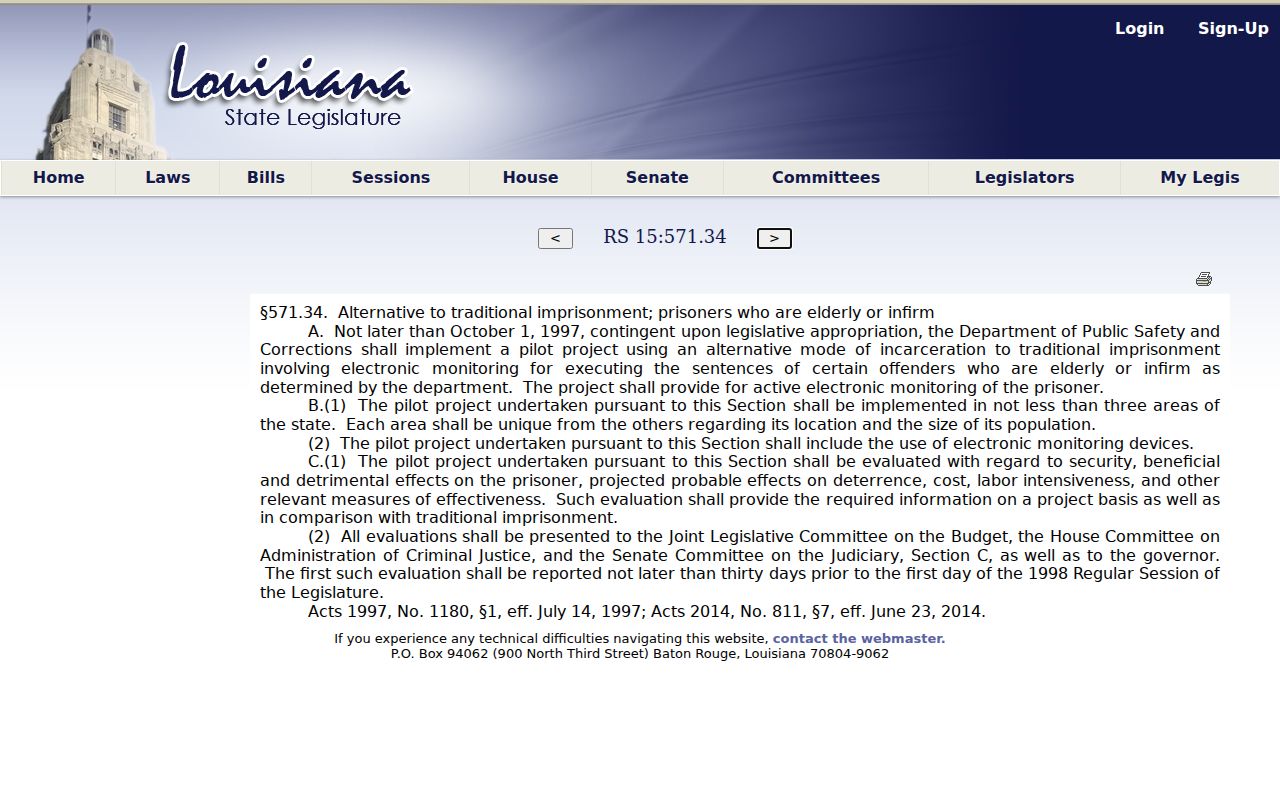
Use official notification tools for awareness, and report a suspected compliance issue to law enforcement rather than confronting anyone.
Verify an Acadia Registry Question
When an entry seems stale, first record the exact public status and the time of the search. Recheck the Louisiana portal, then compare NSOPW. Call LSP support for portal or statewide-record questions. Contact APSO or the appropriate local registration agency for address or compliance clarification. Do not publish a private theory about why two systems differ.
A court disposition can confirm the conviction and sentence but may not show the latest registration compliance event. Likewise, a new booking can document an arrest without proving a registry violation. Keep those sources in their proper roles. A registry support answer may resolve a portal problem, while the local agency is better placed to check a reported Acadia address or compliance concern. For county-wide custodian routing, consult the Acadia Parish records overview.
Lawful Use and Community Notification
Registry information should support personal, family, neighborhood, and community awareness. LSP warns against threats, intimidation, or harassment directed at a registrant or the person's family. Misuse can create criminal or civil liability. If there is an immediate threat, contact law enforcement. For a suspected registration violation, give the agency the official profile details and the basis for concern.
Do not misuse registry data: Never threaten, intimidate, or harass a registrant or family. Louisiana warns that misuse can lead to criminal or civil consequences.
Do not infer risk from a map marker alone. Read the official offense and status information, account for the state's timeliness warning, and verify material questions through the registration agency. The registry is a public safety notice, not permission for vigilantism.