
Criminal Cases in Acadia Parish Courts
The 15th Judicial District Court has original criminal jurisdiction in Acadia Parish. Its clerk files every formal charge submitted by the district attorney and all parish felony matters. A misdemeanor inside city limits can instead remain in Crowley City Court, Rayne City Court, or the Church Point mayor's-court route. Outside a city, a misdemeanor may reach district court through a bill of information or indictment. That jurisdiction split is the first fact to settle when a name produces no district result.
The clerk is the custodian of a filed court case, not the sheriff's arrest narrative or the prosecutor's unfiled referral. Acadia's district divisions are A, F, and J. Minute clerks preserve appearances, pleas, motions, orders, trial events, dispositions, and sentences. Browse the broader Acadia Parish criminal history overview when the needed item might instead be a booking, state repository record, or municipal file.
Acadia Courthouse Public Terminal
The most dependable public starting point is the free terminal in the courthouse. It covers public files and avoids assuming that every criminal module is available remotely. Bring the defendant's full name, date of birth if known, approximate filing year, and a case number when available. Sealed matters will not appear. A terminal hit should be read as a court filing, not proof that each original arrest allegation survived.
The clerk's Criminal Department page describes this office and its work. The captured view below helps identify the official channel before a visit.
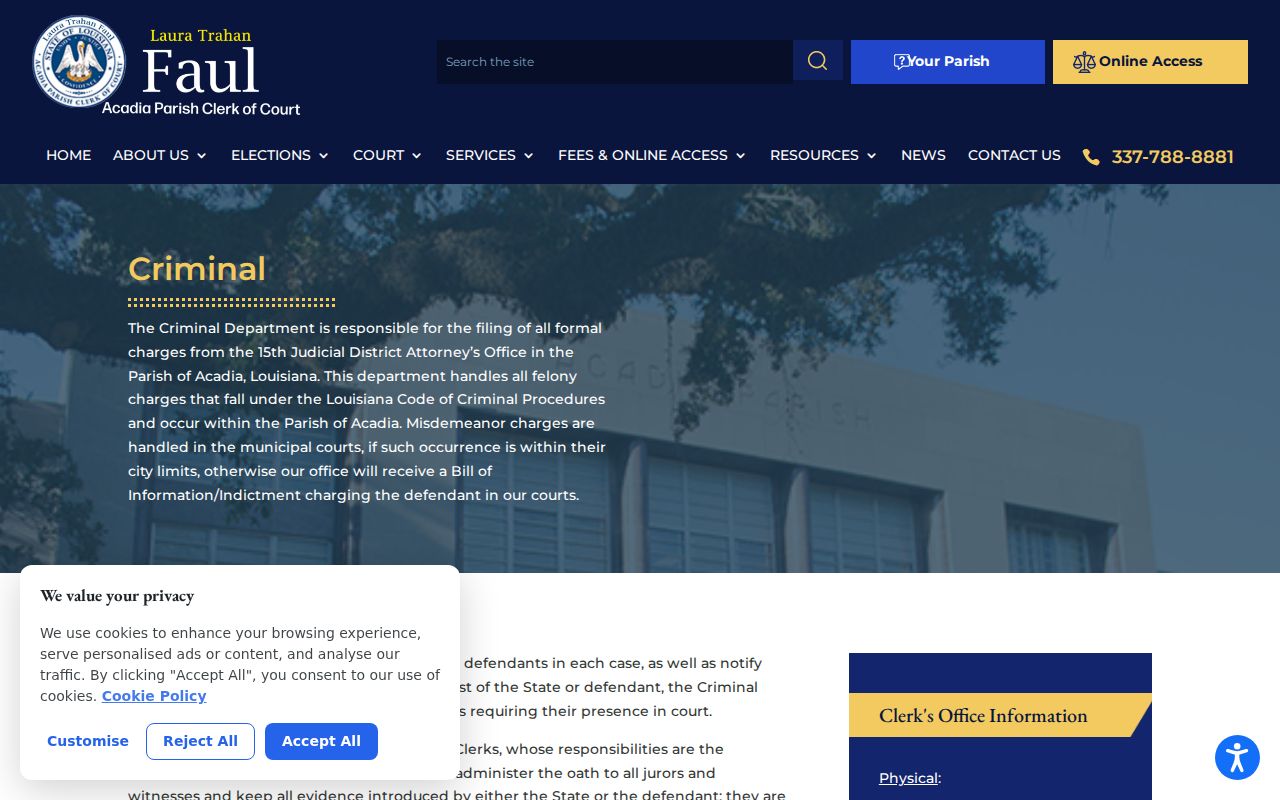
Use the Criminal Department for docket questions, dispositions, minutes, and copies after confirming that the case was filed in district court.
How to Search Case Records
Searches work best as a routing process rather than a single name query. The clerk's standard search is described as covering 1979 forward or 30 years, depending on the product. Ask staff to reconcile that scope for the requested year. Criminal and traffic conversion to remote access remains in transition, so verify current Clerk Connect coverage before buying access.
- Identify district, city, or mayor's court from the charge level and arrest location.
- Use the courthouse terminal for a free search of open district files.
- Call 337-788-8881, extension 5002, or email criminal@acadiaparishclerk.com for a clerk search.
- Read the docket entries for amendments, plea, judgment, and sentence.
- Order a plain or certified disposition when the outcome must be proved.
| Search detail | Use | Limit | Best source |
|---|---|---|---|
| Full name | Find possible parties | Common names need more clues | Terminal or clerk |
| Case number | Open one file | Must match the correct court | Clerk |
| Date of birth | Distinguish people | Public display may be limited | Give to staff |
| Filing year | Narrow an index | Not the arrest date | Terminal or old index |
Acadia Dispositions and Copy Fees
A clerk-performed criminal search costs $20. A plain disposition is $10, while a certified disposition is $15. Transcripts cost $1 per page, and a minute entry is $10. A certified disposition is the stronger choice when the exact court outcome must be documented; a roster entry or arrest report cannot replace it.
The official criminal search and disposition information supplies the fee context shown in the captured page below.
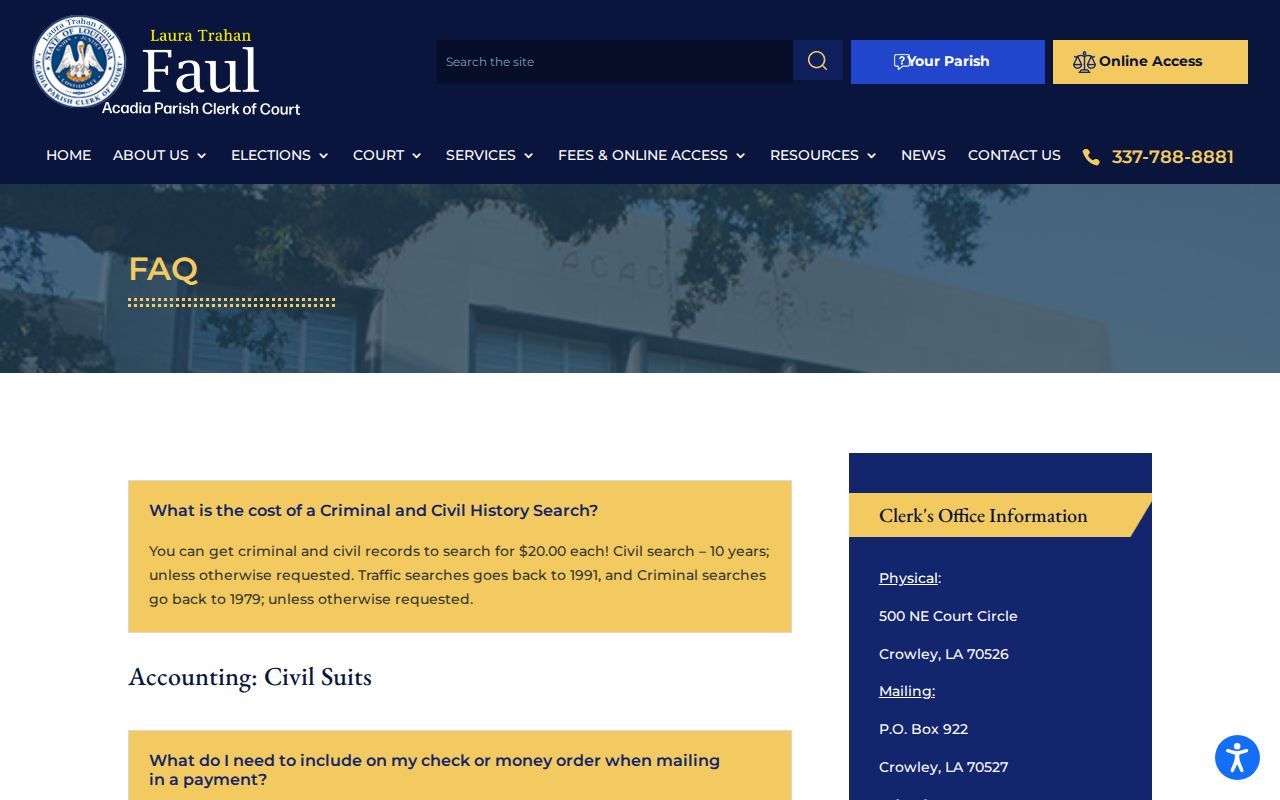
State the case number, name, and whether certification is required before staff prepares the record.
What the Case File Shows
A public file can tie together the formal charge and its final result. Not every field is guaranteed online, and financial details or images may require clerk access. The safe inventory comes from the clerk's official functions and the district case lifecycle.
| Case and court | Number, filing date, allotted division, judge, and status. |
|---|---|
| Charging document | Bill of information or indictment, counts, statutes, and amendments. |
| Docket and minutes | Pleas, settings, motions, orders, subpoenas, and hearing results. |
| Bond | Bond events, type, or amount when entered and public. |
| Disposition | Dismissal, acquittal, guilty result, or other recorded outcome. |
| Sentence | Custody, supervision, fines, costs, and restitution when ordered. |
The clerk's research and copy page shows the official access route.
Ask which entries are viewable at the terminal and which require a copy request.
Stages of a Criminal Case
The arresting agency generally sends its file to the district attorney four to six weeks after arrest. A prosecutor is then assigned and generally reviews it within 30 days. Death or life-punishable matters require indictment; most other filed matters proceed by bill of information. The clerk allots the new case and sets arraignment. A defendant may plead guilty, not guilty, or not guilty and not guilty by reason of insanity.
Case flow: Charges Filed › Arraignment › Pretrial › Plea or Trial › Disposition › Sentencing
Misdemeanors commonly receive a trial date. Felonies generally receive a motion or pretrial date, with discovery and sometimes a preliminary hearing. A judge decides a misdemeanor bench trial; a jury decides a felony trial. A not-guilty result ends prosecution of the charged crime. A guilty result moves to sentencing.
No Acadia Case After Booking
A recent booking can be real even when no court file exists yet. The agency may still be completing its report, the district attorney may be reviewing the referral, or the matter may belong to a city court. Search the Acadia Parish arrest history channels for current custody, then call the correct court after allowing for the documented referral period. Never infer a dismissal merely because the clerk has no case on the day of arrest.
If the prosecutor declines, diverts, amends, or later dismisses a charge, the historical booking remains a separate record. For a missing disposition in Louisiana's fingerprint-linked history, obtain an original certified disposition that matches the arrest date and lists every original and amended charge, outcome, and sentence. Each count in a multi-charge event needs its own disposition.
Acadia Cases Before 1979
Acadia Parish courthouse records have remained at the courthouse since the parish was created in 1887, but survival and practical access vary by file. For a case older than standard search coverage, ask to inspect the old index and make an appointment. Supply an approximate year, name, charge, and any case clue. Staff can then determine whether a surviving file or entry is available.
Remote service does not erase this distinction. The Louisiana Clerks Remote Access Authority provides the framework for contracted clerk access, but it is not an unrestricted statewide criminal database.
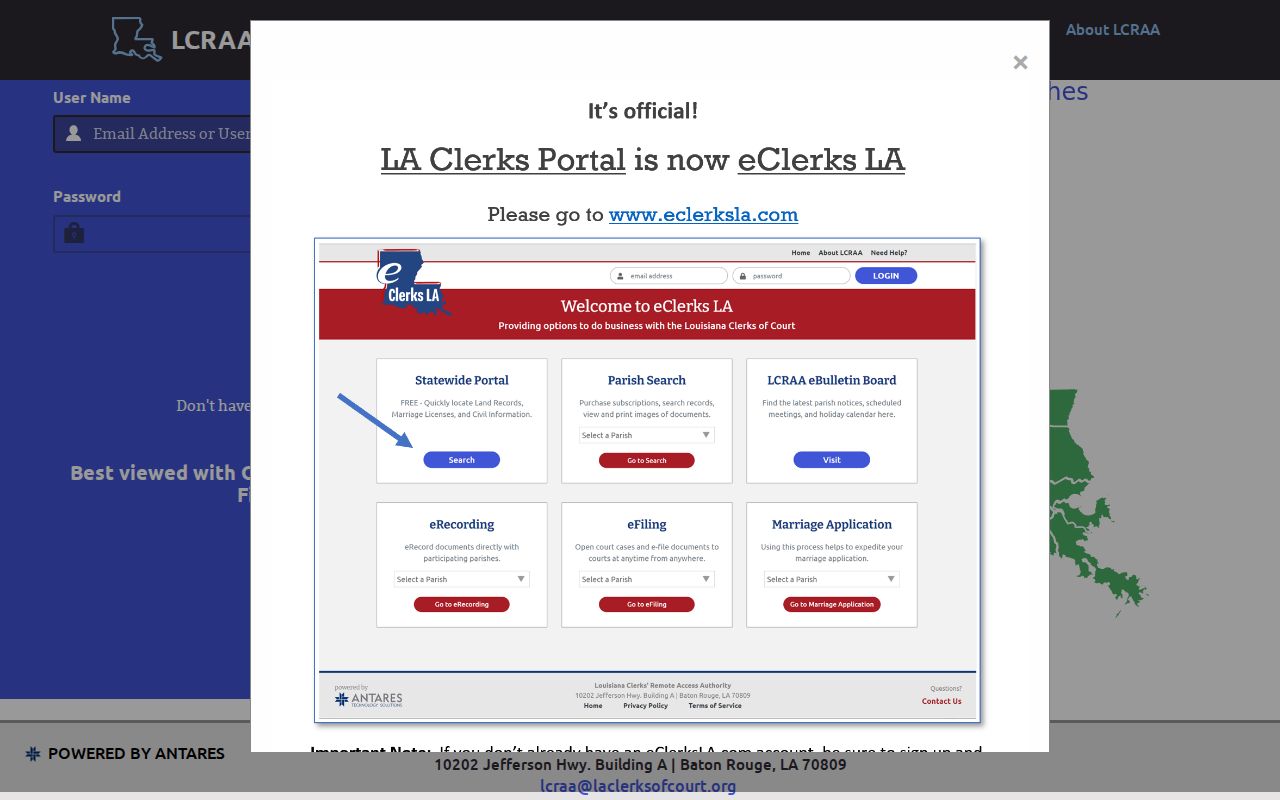
Confirm Acadia's current module, years, image access, and contract terms before relying on remote results.
Reading Louisiana Charge Levels
Louisiana does not use one Class A or Class B misdemeanor ladder or a universal felony-degree system. Louisiana Revised Statute 14:2 defines a felony as a crime for which death or imprisonment at hard labor may be imposed; any other crime is a misdemeanor. Penalties are set offense by offense. That means a docket's statute and charging document matter more than a familiar class label borrowed from another state.
Theft under R.S. 14:67 shows the pattern. Amounts of $1,000 or more carry possible hard-labor exposure at the researched thresholds and are felony-grade, while theft under $1,000 carries up to six months and a possible $1,000 fine. Enhancements, amendments, and plea terms can change the final result. Read the disposition rather than treating the initial offense label as the outcome.
District 15 Defense Records Context
The district attorney and public defender are participants, not substitutes for the clerk's public file. The DA holds referrals, prosecution work, and its own administrative records. Pending-case and attorney-work-product rules may limit those materials. OSPD District 15 represents eligible defendants from its Acadia office at 112 East Hutchison in Crowley, 337-788-3635, weekdays 8:30 a.m. to 4:30 p.m.
The District 15 public defender page identifies the official office.
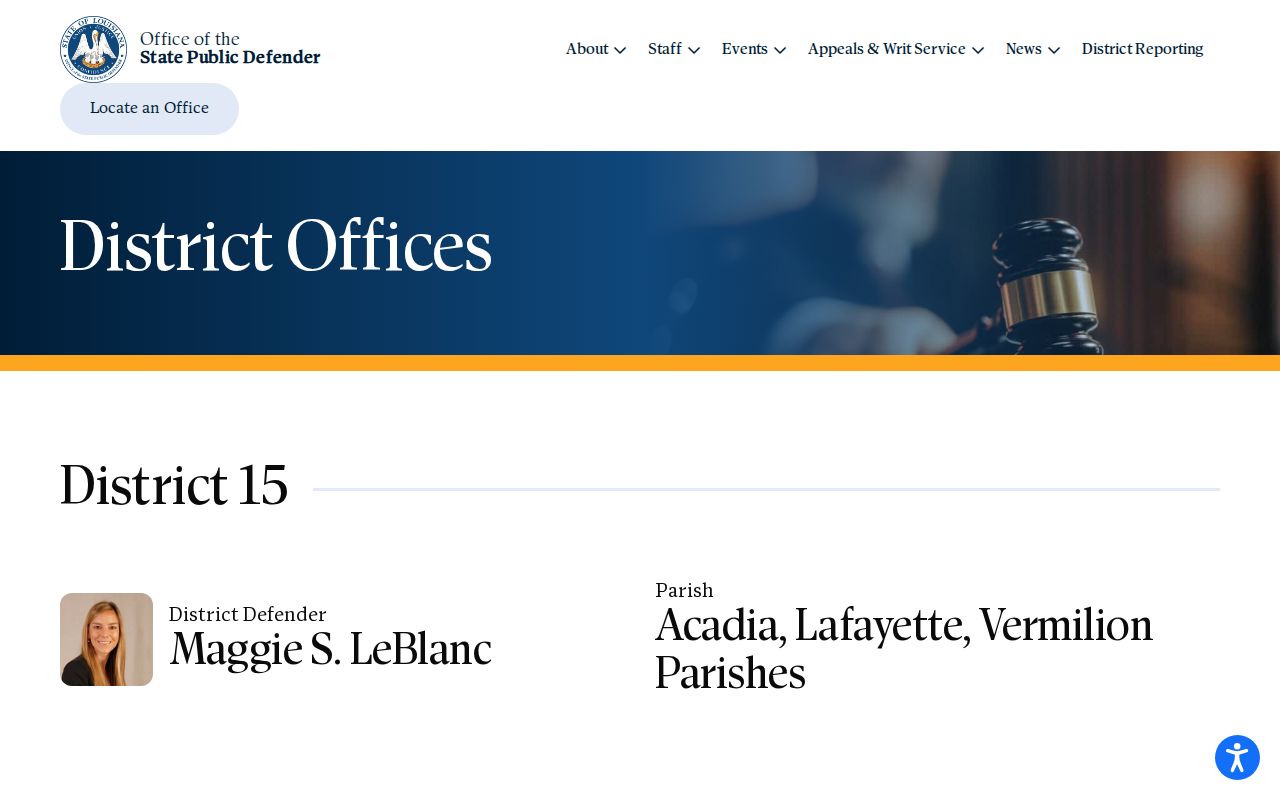
Counsel can explain representation and a client's case, while the clerk remains the source for public docket copies and certified dispositions.
Access & Restrictions
Louisiana's Public Records Law, R.S. 44:1 and following, supports access to public records, but it does not open every item. Sealed and expunged records, juvenile matters, protected victim information, personal identifiers, and some pending-case material may be absent or redacted. The public terminal is limited to public files. A missing online entry can also reflect coverage or conversion rather than a legal restriction.
Direct a precise request to the record's custodian. The clerk keeps filed cases. The DA may not be the statutory custodian of a document created by another agency. Call the Acadia clerk at 337-788-8881 or use the criminal extension and email for case-specific access questions. For municipal matters, use the relevant Crowley, Rayne, or Church Point court route.